Front gate
Automating the gate needs power at the gate post — a trench-and-conduit run from the house, marked in red below. It leaves near the house and crosses the front lawn out to the gate at the tree line. Route lines are illustrative, not surveyed; the exact path, depth, and tap point are for the electrician to confirm on site.
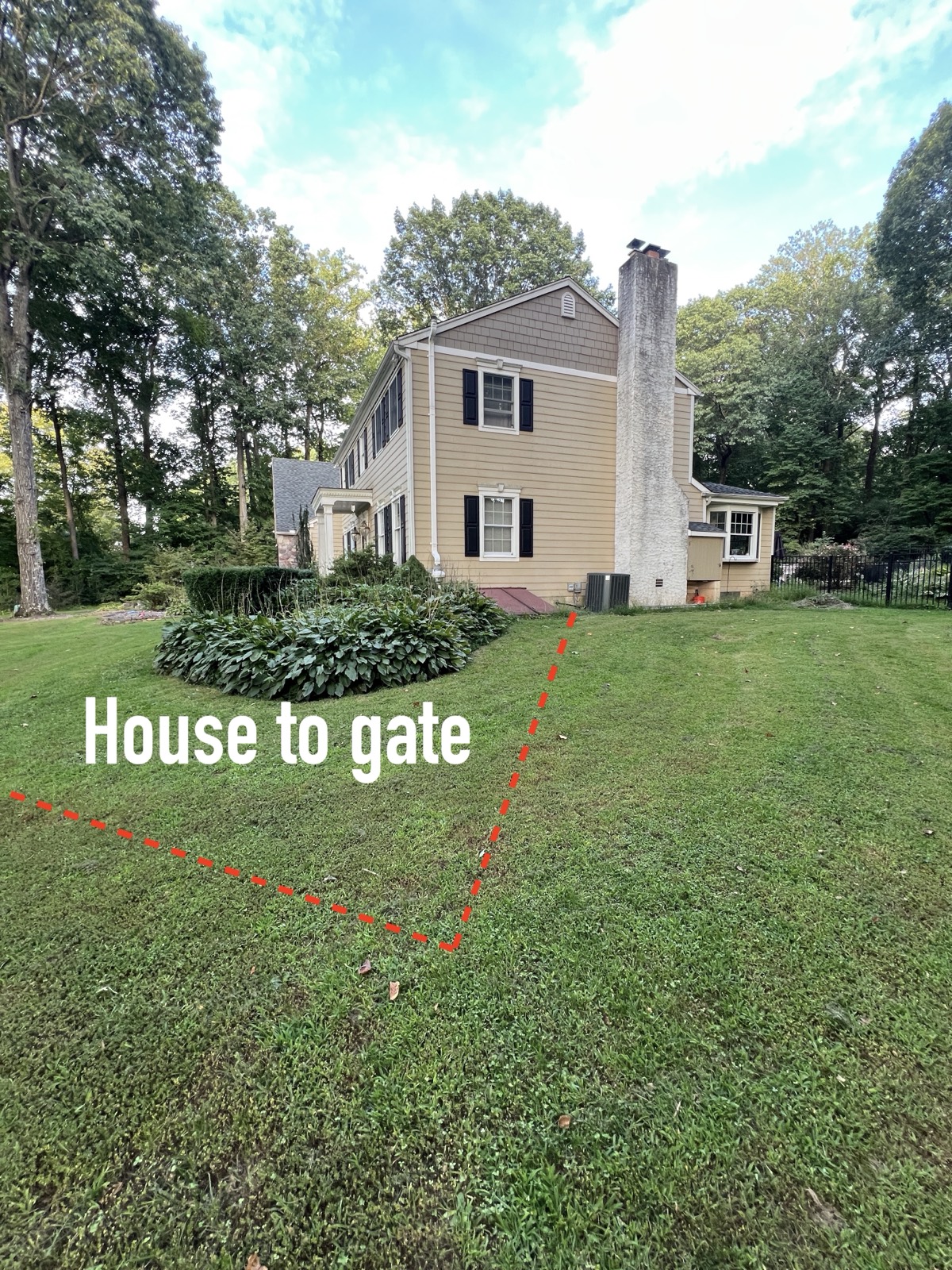
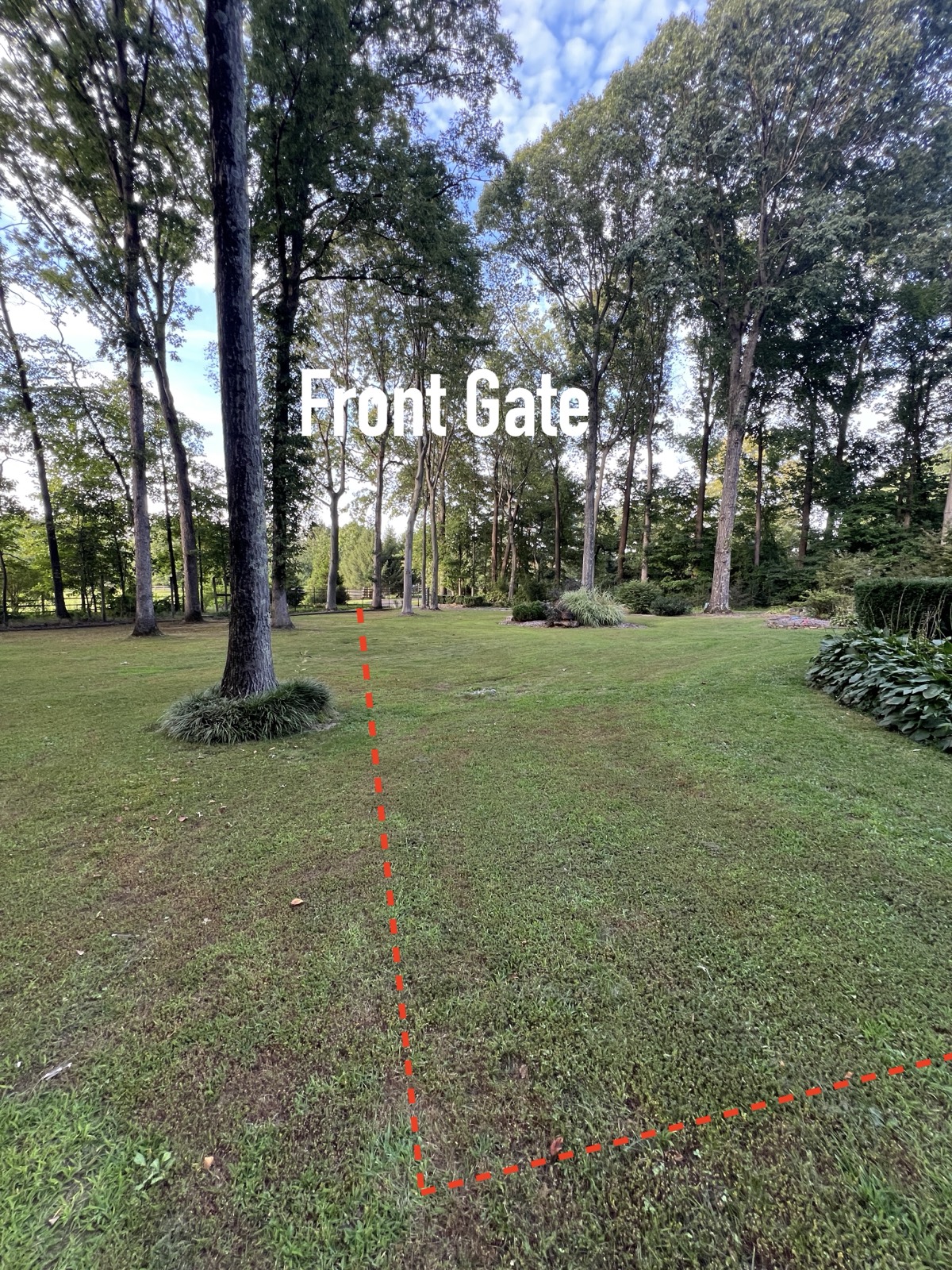
Shared mobilisation with the shed feed. The shed electrical run is the same trade — a trench-and-conduit run leaving the same side of the house. If the timing lines up, both feeds share one mobilisation: one dig, one crew, one lawn-restore, the two runs splitting where their routes diverge. To confirm with the electrician: whether the gate leg (low-voltage or 120 V) and the shed leg (the 40 A subpanel feed) can share a common trench at their respective code depths, or want separate conduits in the same dig.
Contractors
- Gate replacement: Strong Fence, LLC (Pottstown PA) — vetting in progress, quote in flight 21 May 2026. Scoped for replacement only; not automation or grid. Pottstown → New Hope ~40 mi.
- Gate automation: seeking contractors. Separate specialty from the gate-build firm — motor install + control surface (keypad / car-tag / app) end-to-end. Often the line where you split fence-builder + automation-specialist. Candidates to be added in the contractors section as
pending-vetting. - Electrical trenching for gate power: seeking contractors. Could be the same electrician as house panel work, OR a dedicated landscape-electrical specialist (different licensing in PA). Some gate-automation firms include this in scope; verify per vendor.
- Cattle grid installation: seeking contractors (if proceeding). Search "cattle guard installer" + "PA" — typically a fabricator with a flatbed delivery, distinct from gate vendors.
- Wildlife pressure: deer activity at the gate-to-driveway threshold is a known issue in New Hope (Bucks County). Cattle grid effective deterrent for hooved animals, less so for smaller wildlife.
- Power-to-gate options: direct-bury 12-gauge UF cable + conduit (~$3-5/ft installed, plus trenching), vs solar+battery (~$1,500-3,000 hardware + install). Reliability vs cost.
- Gate-automation hardware: mainstream brands include LiftMaster, FAAC, Nice, BFT, GTO — varies by gate weight + cycle frequency + climate.