Hayward
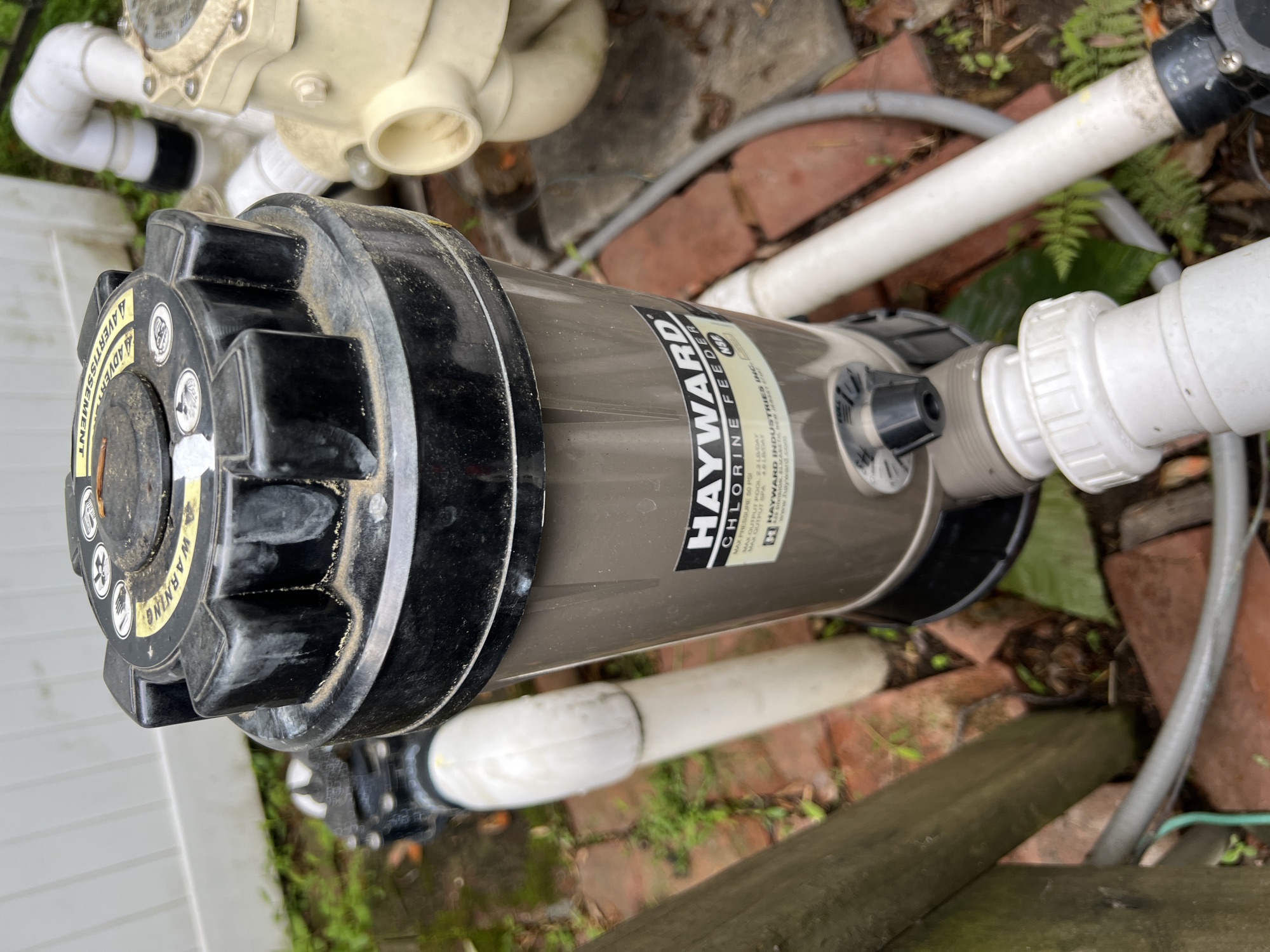
Chlorine feeder
Inline trichlor tablet feeder · automatic chlorination · clear-canister design · in service at New Hope
Model
Hayward inline chlorine feeder · typical residential model: CL100 (off-line) or CL200 (in-line). The clear-canister design and dosing knob match the CL200 family; confirm part number from a side label on the next inspection
Chemical type
3-inch trichlor chlorinating tablets · feeder is designed for trichlor tabs specifically — do NOT load cal-hypo, dichlor, or shock product into this canister; mixing chemistries in a sealed canister is the classic chlorinator explosion mechanism
Position in the loop
Inline on the return side — pump → filter → heater → feeder → pool returns · feeder operates whenever the pump is on; closure depends on flow, so any unplanned pump-off interrupts chlorination
Tablet source
Doheny's 3-inch chlorinating tablets · cross-referenced in the consumables record
Location
pa · 6279 Greenhill Road, New Hope PA 18938 · pool equipment pad, return-side of the loop
Tablet refill cadence
| Season | Refill frequency | Tablets per refill | Notes |
|---|---|---|---|
| Hot season (Jun–Aug) | Weekly | 6 tablets | Pump runs long hours · UV degrades chlorine faster · swim load higher |
| Shoulder / fall (Sep–Oct) | Every 2 weeks | 6 tablets | Demand drops; tablet life extends |
| Winter / closed | — | — | Feeder bypassed or empty during closing |
Current status
In service. Cadence captured 26 May 2026. Next steward actions: (1) confirm exact Hayward model number from a side label, (2) note last refill date + tab count remaining inside canister, (3) lock annual tablet budget against the cadence above.
Service log
No entries yet. Track each refill: date, number of tablets added, tab count remaining at top of canister. Pattern will surface deviations from the cadence above.
Cross-references
- Pool category index — the parent page lists every pool-system record in one place
- Doheny's 3-inch trichlor tablets — the consumable this feeder dispenses; restock cadence and SKU live there
- Pentair IntelliFlo VS-F pump — feeder closure depends on pump-on flow; an unplanned pump-off stops chlorination
- Muriatic acid (pH down) — trichlor is acidic; the long-run pH drift is offset by acid (or rarely by sodium carbonate up if it overshoots)